Showing posts with label athletic recruitment. Show all posts

Tuesday, May 23, 2023

4 Things Athletes Can Do This Summer To Improve Their Recruitment Chances

By Matt Musico

The college athletic recruitment process is a big ball of intimidating unknowns for students and families trying to navigate it. Summertime can be a great opportunity for high school student-athletes to get in front of college coaches at showcases, tournaments and clinics, and visit college campuses.

Here are four things high school athletes can do over the summer that may help them manage the recruitment process and improve their recruitment chances.

1. Focus on Improving Your Game

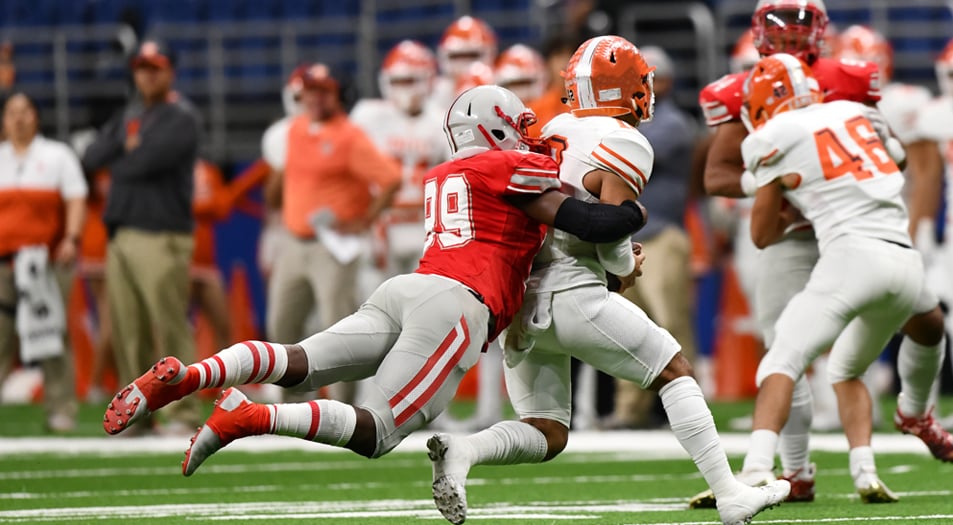
blog-athletic-recruit.jpg

Summertime is the perfect opportunity to make significant progress in your own development. Do you wish you could throw more weight around in the gym? Is there a certain aspect of your game you’d like to strengthen but you never had the time to do it? Well, now you have a chance to make significant progress.

There’s no need to do this alone, though. Developing a plan of attack is crucial toward achieving any goal. Reach out to a trusted adult (trainer, high school coach, club coach, etc.), share what you’d like to accomplish over the summer, and devise a plan to follow so you can get there.

Once the time comes and you’re finally getting evaluated by college coaches in person or it’s time to make that highlight video, you’re likely a vastly different – and better – athletic version of yourself than you were even just a couple months ago.

2. Learn How to Market Yourself

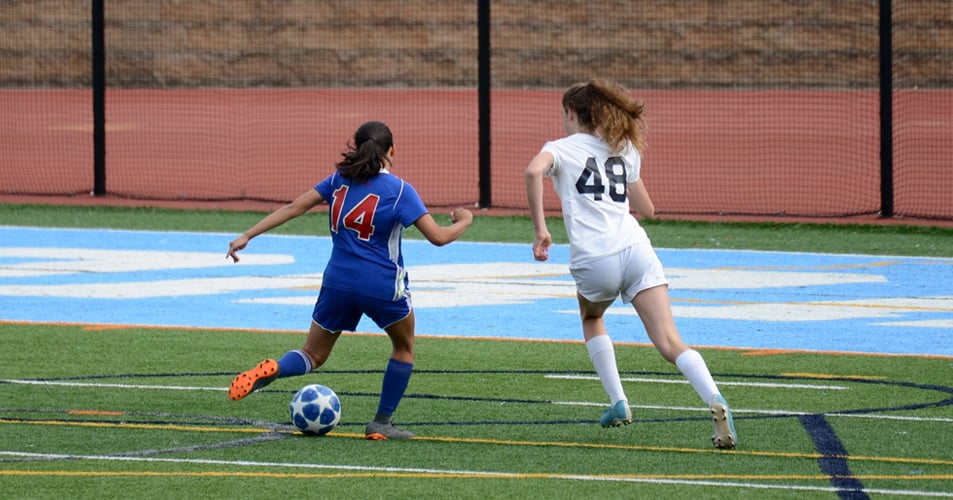
athletic-recruit-2

The college admission and athletic recruitment experiences provide lessons high schoolers can use forever. One such skill that’s uncomfortable for many is marketing yourself. You may not be comfortable putting yourself in a vulnerable position to receive criticism, but it may be necessary, especially if you’re not a blue-chip recruit.

Getting your name in front of busy college coaches can be equally challenging. Here are three things you can do from the comfort of your own couch to help improve your recruitment chances:

  • Submit prospective student-athlete questionnaires. If a college offers athletics, it’s likely that some sort of athletic questionnaire lives on the college’s athletic website – it’s just not easy to find all the time. Some colleges have it right on the athletic home page, or on each sport’s homepage, or in an obscure location on the school’s website. What’s good about filling this out, though, is that doing so puts your information right into a coach’s recruitment database. For a sample, see Clemson University’s Football Recruiting Questionnaire.
  • Send introductory emails to the coaching staff at each school. In addition to filling out the questionnaire, it’s important to follow that up with an email to the coaching staff introducing yourself, while also sharing relevant information (athletic resume, highlight video if it’s available, transcripts, etc.). Don’t opt for sending this to only the head coach. The coach may have the final say, but there’s likely someone else on the staff in charge of recruitment efforts. Send this email to everyone on the staff so you increase your chances it gets in the right hands.
  • Leverage social media and the power of the internet. Don’t be shy about posting clips of yourself, and make sure you tag any accounts that can help increase exposure. You also shouldn’t be shy about following and/or direct messaging coaches or recruitment departments. Just be thoughtful about the way and how often you communicate. This is the time to get creative and let the power of social media potentially help you get ahead.

If you’re looking for an easy way to find the athletic department of colleges you’re interested in, the NCAA’s Search for a School function is helpful.

3. Look into college summer showcases

Participating in a college showcase is an opportunity to play in front of multiple colleges at once, although you should be aware of the limitations of showcases. According to Varsity Edge, “Many families attend showcases hoping for the pot of gold at the end of the rainbow, and it’s not that simple. Simply showing up, hitting a few home runs or 3-pointers probably will not get you a scholarship offer the next day!” However, many coaches use showcases as a tool to select students they may want to pursue further.

4. Do Thoughtful (& Thorough) College Research

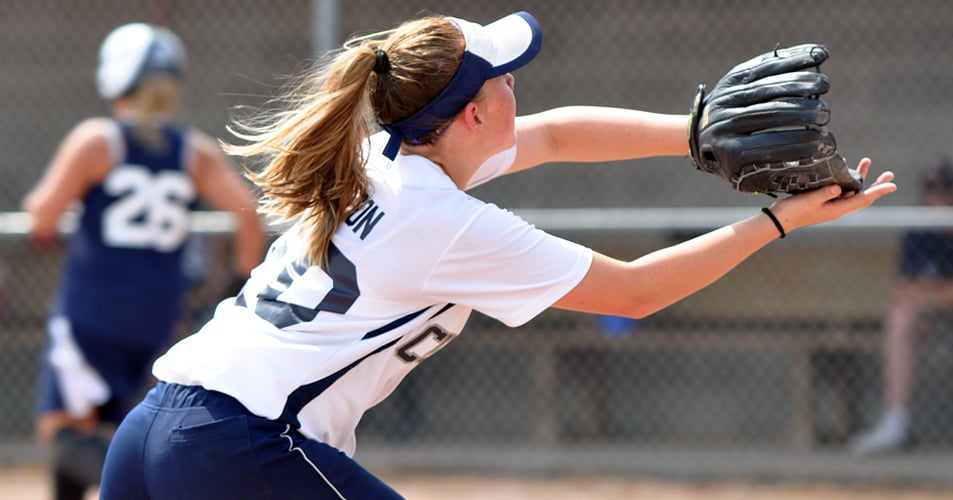
athletic-recruit-3

There’s nothing wrong with having athletics drive your college application experience. However, just be mindful that there are many factors that you should consider when evaluating a college.

Coaches and administrators can leave or get fired. Upperclassmen teammates will either graduate or transfer. You could get injured, and it’ll change your entire trajectory, or maybe you won’t even be able to play anymore. The last thing any college athlete needs to realize is he or she is only attending a school for the athletics program, and actually hates every other aspect of the school.

This is where thoughtful college research comes into play. Always check out the athletics program and do your due diligence, but also apply that to everything else. What kind of majors are available? What kind of internships do students in those programs get? How are the dorms? Is the food bearable? What does the general vibe of the campus seem like?

There are no wrong questions to ask — if it’s on your mind, it’s worth finding out. The goal of a final college list is to be excited about every single one of the schools that land on it, whether sports are part of the picture or not.


Matt Musico is a full-time sportswriter, but he's also spent the better part of a decade working in higher education. Half of that time was spent working in an undergraduate admissions office, while the other half has involved working with high school families as a private college counselor.


Friday, May 20, 2022

7 Tips To Prepare For The Athletic Recruitment Process

Competitive collegiate swimmer doing butterfly stroke in pool

Start making immediate progress with your athletic recruitment experience by following along with these seven tips.

Officially deciding to pursue your sport of choice in college is equal parts exciting and nerve-racking. Many of the nerves may stem from the athletic recruitment process itself, which contains a lot of gray areas and variables. As we continue navigating through a global pandemic, those uncertainties still hold true.  

The most important aspect of athletic recruiting -- and many things in life, really --  is finding a way to make incremental progress feel productive. The following seven tips will help accomplish that while allowing students participating in the athletic recruitment process to feel ready for the experience. 


7-tips-athletic-recruitment-1

1. Get Educated On the Process

Before jumping head-first into an endeavor, it’s a good idea to get educated on that particular topic as much as possible. For an experience with as many variables as athletic recruitment, taking time to read as much as you can on the topic could do a world of good — especially if this is the first time going through it. There are many websites and blog posts out there with accurate information and informed opinions. However, when I first start working with a prospective recruit, the first thing I recommend is that he or she read the NCAA’s Guide for the College-Bound Student Athlete.

This guide is helpful because it’s an all-encompassing resource on athletic recruitment. Some of the topics discussed include the varying academic standards for Divisions I, II, and III athletics, information on scholarships, national letters of intent, recruiting calendars, and much more. 

For those students who’d like to play varsity sports, but not at the NCAA level, there is also the National Association of Intercollegiate Athletics (NAIA). For information on how NAIA differs from NCAA, there is a college-bound student-athlete guide for that level, too.

2. Gather the Necessary Academic Information

For recruits who must market themselves to college coaches, it’s crucial to have all the necessary academic information on hand for whenever it’s needed. The goal is to make a coach’s job as easy as possible from a recruitment standpoint because it allows the coach to focus on what’s really important and shows that a potential recruit is serious about playing at the next level.

Academically speaking, there are a few things student-athletes should always have ready: an updated unofficial transcript, current year and/or next year’s course schedule, any available SAT/ACT scores (practice or official tests), and the dates of any planned future tests.

If a coach is interested in a recruit, he or she will want (among other information) the recruit’s relevant academic information to bring to the admissions office to see if that athlete would be a competitive applicant. Providing all this academic information to the coach makes his or her job much easier, and it provides clarity to a recruit much faster regarding whether or not he or she has a good shot at recruitment.


7-tips-athletic-recruitment-2

3. Gather the Necessary Athletic Information

In addition to giving coaches all the academic information necessary to do a pre-evaluation, student-athletes should be doing the same for their athletic information/background. The best way to present this is with an athletic resume. The formatting is completely up to the recruit — there is no right or wrong way to do it — but for those in need of guidance or creative inspiration, plenty of templates can be found from a simple Google search. 

While the formatting can vary, the information typically needs to be consistent. Some of the things that should be included are the following: 

  • The name and contact information for your high school/club coach
  • Any information regarding club/travel/AAU team(s)
  • Relevant personal details (date of birth, position, height, weight, and other similar information)
  • Relevant and/or most updated statistics
  • Any individual/team awards won during high school
  • Names of past camps/showcases/clinics that have been attended, and names/dates of any scheduled in the future

Again, this makes a coach’s job much easier, and he or she will be able to get a better read on a recruit who has all this information ready and organized to share.


7-tips-athletic-recruitment-3

4. Give Coaches Something to Look At

While creating a short highlight video has always been a good idea, it’s become crucial in a world where in-person recruiting has become extremely hard since the pandemic hit. All of the academic and athletic information is great to send, but for a coach to continue pursuing recruits from there, he or she typically likes to get a sense of a student’s athletic ability.

Brevity is important to strive for when creating and sending highlight videos. College coaches are typically expert multi-taskers, so time is always of the essence. They want to get all the pertinent details in a concise manner, which means about three to five minutes for highlight videos.

This gives a potential recruit plenty of opportunities to showcase his or her skills in both practice and game settings where he or she is easily identifiable. View this as one of the best marketing tools to display skills to as many people as possible, and don’t forget about using clips on social media periodically. Twitter, Instagram, and YouTube are common places students with whom I’ve worked have gotten noticed and contacted by coaches in recent years. 

5. Officially Get Into a Coach’s Recruitment Database

One of the best ways to begin a relationship with a college coaching staff is to send an introductory email. It allows the student to share all the information mentioned above, as well as controlling the narrative around this process a bit. However, there may be a whole host of reasons why a coach or the staff doesn’t respond right away (they’re in-season and busy, it’s a dead period, etc.). 

So, another way to officially get into a coach’s database is by filling out the prospective student-athlete questionnaire. This will typically live somewhere on a school’s official athletics homepage or on each of the team-specific pages. If you can’t find it, ask a college counselor. If that still doesn’t work, pick up the phone and call the admissions office.

While they vary by school and sport, here’s an example from Syracuse University to see the types of questions that are asked on a typical student-athlete questionnaire.


7-tips-athletic-recruitment-4

6. Create a System to Stay Organized

It’s very exciting to go through the process of reaching out to a coaching staff and have that action result in a genuine (and non-automated) response. It’s less exciting when that momentum is stifled because of a student’s lack of organization or not checking emails regularly.

I encourage my student-athletes to create some kind of tracking document or system to have everything in one place. As a starting point, general information to keep track of includes: name of college, coach's name and contract info, date of initial communication, date of coach's response, and date of highlight video/athletic resume sent. 

Simply staying organized may help students to take advantage of any progress or opportunity that comes their way.


7-tips-athletic-recruitment-5

7. Register With the NCAA Eligibility Center

Students are technically allowed to register with the NCAA Eligibility Center at any point in their high school career. With regard to the overall recruiting timeline, though, it’s best to have this registration completed by the start of junior year. The Eligibility Center certifies whether a recruit is qualified to play Division I or II sports based on the student’s academic record, standardized test scores, and amateur status. Registering with the NCAA Eligibility Center by the start of junior year is another one of those small details of this experience that can show coaches a prospective recruit is serious about playing sports at the college level. 

We all feel good when we make progress on dreams and goals. Hopefully, these seven tips will act as a beginning checklist to help student-athletes and their families pick up some immediate momentum in the early stages of this experience.

Matt Musico, a current college counselor at Collegewise is a freelance writer for CollegeData. He has worked in higher education for the better part of a decade. Half of that time was spent working in an undergraduate admissions office, while the other half has involved working with high school families as a private college counselor.
Become a BigFuture Ambassador

What Ambassadors Do?   Connect with Each Other Once a month, meet on Zoom for an hour in the evening. Betwee...